В системата за пожароизвестяване с адресна идентификация всеки детектор, ръчен известителен пункт, звуков предавател и модул получава индивидуален цифров адрес. Контролният панел използва този адрес, за да идентифицира устройството, да покаже местоположението му, да отчита неизправности и да изпълнява програмирани действия. Адресите могат да бъдат зададени ръчно, чрез самоадресиране или автоматично чрез идентификационен номер на устройството или позиция на веригата.
Адресирането на устройствата е една от основните разлики между конвенционалните и адресируемите системи за пожароизвестяване. Конвенционалният панел идентифицира засегнатата зона, докато адресируемият панел комуникира с всяко устройство отделно.
Защо всяко устройство се нуждае от адрес?
Адресът позволява на панела да разграничи едно устройство от всяко друго устройство, свързано към веригата.
Когато детекторът се активира, панелът може да показва информация като:
Поток 1, адрес 37: Дифузьор за дим, заседателна зала 2
Същият принцип се прилага и за грешки, предупреждения за замърсяване, неизправни устройства, ръчни точки за обаждане, сигнализатори и входно-изходни модули. Правилното адресиране следователно подпомага по-бързото разследване на сигналите, по-лесното поддържане и прецизното програмиране на причините и последиците.
Всеки уред трябва да има валиден адрес, който вече не се използва от друго устройство в същата верига. Достъпният обхват на адресите зависи от системата за пожароизвестителна система. Телетек ТТЕ лупите например поддържат адреси от 1 до 250.
Методи за адресиране на устройства в сравнение
Има 4 основни опции, когато става дума за адресирането на устройствата. Ще ги разгледаме по-подробно във всеки един от тях по-долу в тази статия, но за да започнем, ето кратък преглед:
Метод
Как работи
Основни предимства
ОСНОВНИ ОГРАНИЧЕНИЯ
Ръчно адресиране
Устройствата получават адрес поотделно
Пълна контрола над нумерирането
По-бавна и зависима от точни записи
Самообслужване
Устройствата се свързват един по един и получават следващия свободен адрес.
Лесно свързване между адрес и физическо местоположение
Изисква последователна инсталация
Автоматично по идентификационен номер
Панелът открива инсталираните устройства и присвоява адреси според техните идентификационни номера
Бърз и подходящ за устройства без изолатори
Номерът може да не следва маршрута на окабеляването
Автоматично чрез изолатор
Панелът разглежда устройствата според тяхното местоположение в веригата.
Бърза и логична последователност на кабелите, както и идентификация на клоновете
Изисква изолатори по цялата верига
Какви са основните методи за адресиране на устройствата?
1. Ръчно адресиране
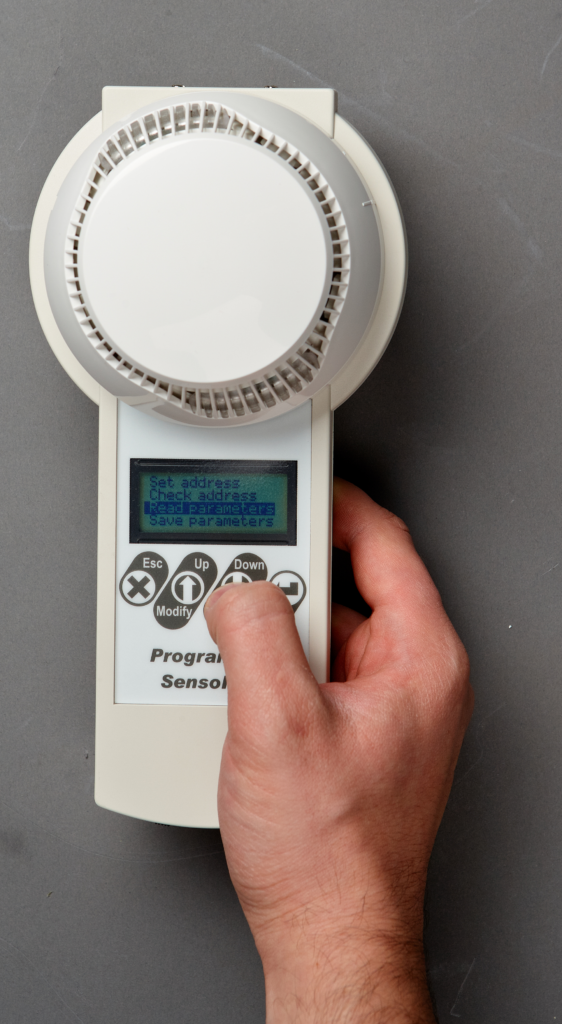
При ръчно задаване на адрес инсталаторът задава избран адрес на всяко устройство преди или по време на инсталацията. Това може да се направи чрез панел за пожарна аларма, ръчен програматор или инструмент за тестване на веригата.
Инсталаторът може да следва системните чертежи и умишлено да присвоява адреси според етажите, стаите или групите устройства. Това осигурява пълен контрол върху номерацията и улеснява окончателната конфигурация, което прави сравнението с проектната документация по-лесно.
Недостатъкът е времето, необходимо за това. Всеки уред трябва да се обработва индивидуално, да се записва правилно и да се проверява, за да се избегнат дублирани или липсващи адреси.
Ръчното адресиране е следователно практично за малки системи, за смяна на устройства или за добавяне на няколко нови устройства, Но може да стане неефективно при цикъл, включващ стотици устройства.
Например, програмата SensoIRIS може да чете и записва адреси на устройствата и да конфигурира избрани параметри, преди да бъде добавено устройството към системата.
2. Самообслужване
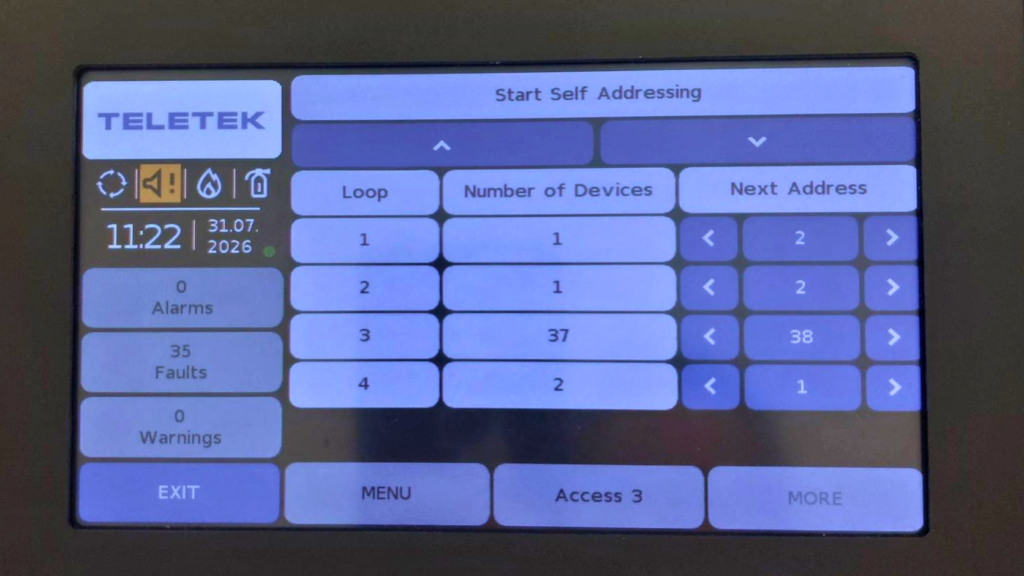
Саморегулиращият се адрес комбинира автоматичното присвояване на адреси с контролиран ред на инсталацията.
Инсталаторът стартира процедурата за саморегистриране в панела, който показва следващия наличен адрес. След това устройствата се монтират или свързват един по един. Всеки ново свързан уред получава показанияя адрес, след което панелът автоматично преминава към следващия свободен номер.
Този метод улеснява свързването на всеки адрес с неговото физическо местоположение, тъй като инсталаторът контролира реда, в който се добавят устройствата. Също така намалява риска от случайно присвояване на един и същ адрес два пъти.
Въпреки това, устройствата трябва да бъдат свързани последователно. Ако вече са монтирани в цялата сграда, самостоятелното адресване може да изисква допълнителна координация между инженерите от панела и монтажните фирми, работещи на мястото.
3. Автоматично адресиране чрез идентификационен номер на устройството
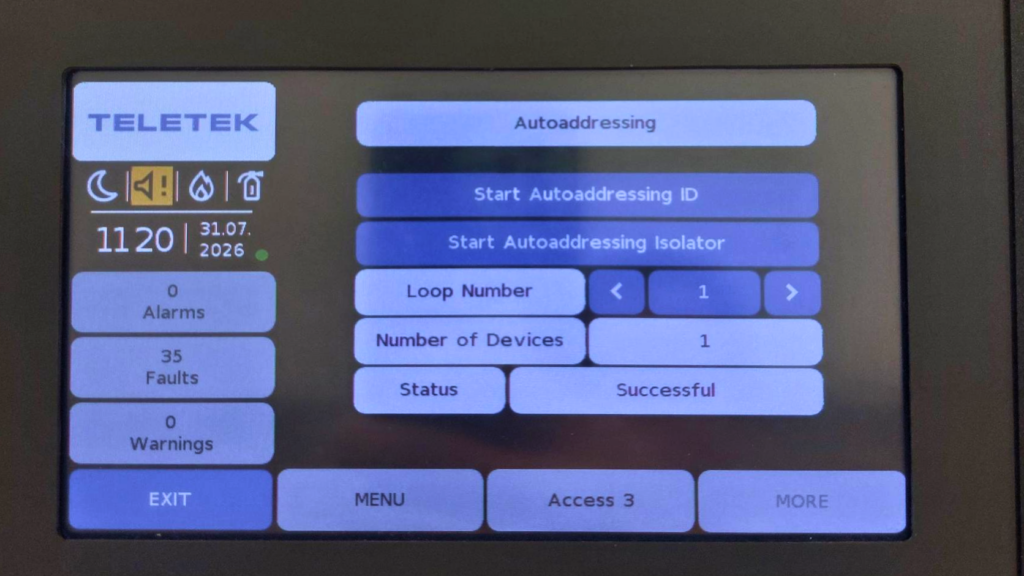
С автоматичното адресване по идентификационен номер всички устройства могат първо да бъдат инсталирани върху антената без отделни операционни адреси. След това панелът ги открива и им присвоява адреси по време на една автоматизирана процедура.
В системите Teletek процесът се базира на идентификационните номера на устройствата и ги групира според типа устройство, като първият е детектора, следван от звуковите устройства, ръчните точки за обаждане и модулите. Това е особено полезно, когато веригата включва устройства без вградени изолатори.
Основното предимство е скоростта. Монтьорите не трябва да свързват всеки отделен уред по време на процеса на адресна идентификация.
Ограничението е, че зададеният цифров ред не може да следва физическия маршрут на кабела или последователността в стаята. Поради това инженерен инженер трябва внимателно да свърже всеки открит уред със съответното му местоположение преди да завърши конфигурацията на системата.
4. Автоматично адресиране чрез изолатор
Автоматичното адресиране чрез изолатор позволява на панела да присвоява адреси според физическия ред на устройствата по линията на веригата.
Панелът започва от едната страна на цикълът и адресира всеки компонент последователно. Когато е поддържан, той може също да идентифицира клонове и да продължи с номерирането през всеки от тях, преди да се върне към основния цикъл.
Това създава адресна последователност, която по-точно отразява маршрута на свързване, което може да опрости пускането в експлоатация и бъдещите диагностични процедури.
Методът изисква всеки уред да разполага с вграден изолатор или подходящо свързан изолатор, когато конструкцията на устройството го позволява. Получената адресно-редица все пак следва пътя на кабела, а не номерата на стаите, така че местата трябва да бъдат проверени и маркирани правилно.
Често задавани въпроси
Не. При самостоятелното адресване устройствата се свързват поотделно и получават адреси един по един. При автоматичното адресване устройствата вече могат да бъдат инсталирани, а панелът извършва процеса на адресване през целия кръг.
Не само това. Панелът задава оперативен адрес и идентифицира типа устройство, но инсталаторът все пак трябва да свърже това устройство с действителното му местоположение или помещение.
Да. Адресите обикновено могат да бъдат променени чрез панела или подходящ програмно средство. След това е необходимо да бъдат прегледани и тествани етикетът на устройството, описанието на панела, чертежите, зоните и всякакви свързани с тях програмни настройки.
Не. Конвенционалните устройства са свързани с зонични вериги и се идентифицират като цяло чрез зони. Индивидуалното адресиране на устройствата е характеристика на адресируемите пожароизвестителни системи.