Die Brandschutzlösung in großen Gewerbebauten erfordert mehr als nur die Anbringung zusätzlicher Detektoren in größeren Räumen. Mit zunehmender Anzahl von Etagen, Anwohnern, Räumen und Gebäudeteilen muss das Brandmeldesystem präzise Ereigniserkennung, skalierbare Steuerung, koordinierte Evakuierung und zuverlässige Kommunikation über die gesamte Immobilie gewährleisten.
Die Priorität ändert sich daher von der bloßen Erkennung eines Feuers hin zu Effiziente Verwaltung eines großen und komplexen Systems bei einem Ereignis.
Welche Veränderungen in einem großen Gewerbegebäude?
Je größer ein Gebäude wird, desto mehr Informationen muss das Brandmeldesystem verwalten.
Überlegung
SMALL COMMERCIAL
GROSSER KOMMERZIEL
Alarmsignalisierung
Eine Zone reicht möglicherweise aus, um eine schnelle Untersuchung durchzuführen.
Die genaue Geräte- und Standortinformation wird immer wichtiger.
Systemgröße
Ein Panel deckt die Räumlichkeiten ab.
Mehrere Schlaufen oder vernetzte Paneele können erforderlich sein
Evakuierung
In der Regel relativ einfach
Kann mehrere Etagen, Zonen oder Phasen umfassen
Baukombination
Begrenzte externe Steuerungsmöglichkeiten
Feuer- und Rauchschutztüren, Aufzüge, HVAC-Systeme, Rauchmelder, BMS-Systeme und andere Systeme können beteiligt sein.
Benachrichtigung
Sounders könnten ausreichen
Hör-, Sicht- und Sprachevakuierung können kombiniert werden
Erweiterung
In der Regel beschränkt sich dies auf temporäre Layoutänderungen.
Die zukünftigen Mieter, die Etagen, Erweiterungen und Änderungen der Grundrissgestaltung müssen berücksichtigt werden.
Wie schützen vernetzte Feueralarmsysteme große Gebäude?
Ein einziger Bedienfeld ist für eine große Immobilie nicht immer praktisch.
Verbundene Brandmeldeanlagen ermöglichen es verschiedenen Bereichen eines Gebäudes oder sogar einzelnen Gebäuden innerhalb desselben Komplexes, als Bestandteile eines koordinierten Systems zu funktionieren. Jede Anlage kann ihre lokalen Geräte steuern und gleichzeitig Alarm-, Störungs- und Systeminformationen über das Netzwerk austauschen.
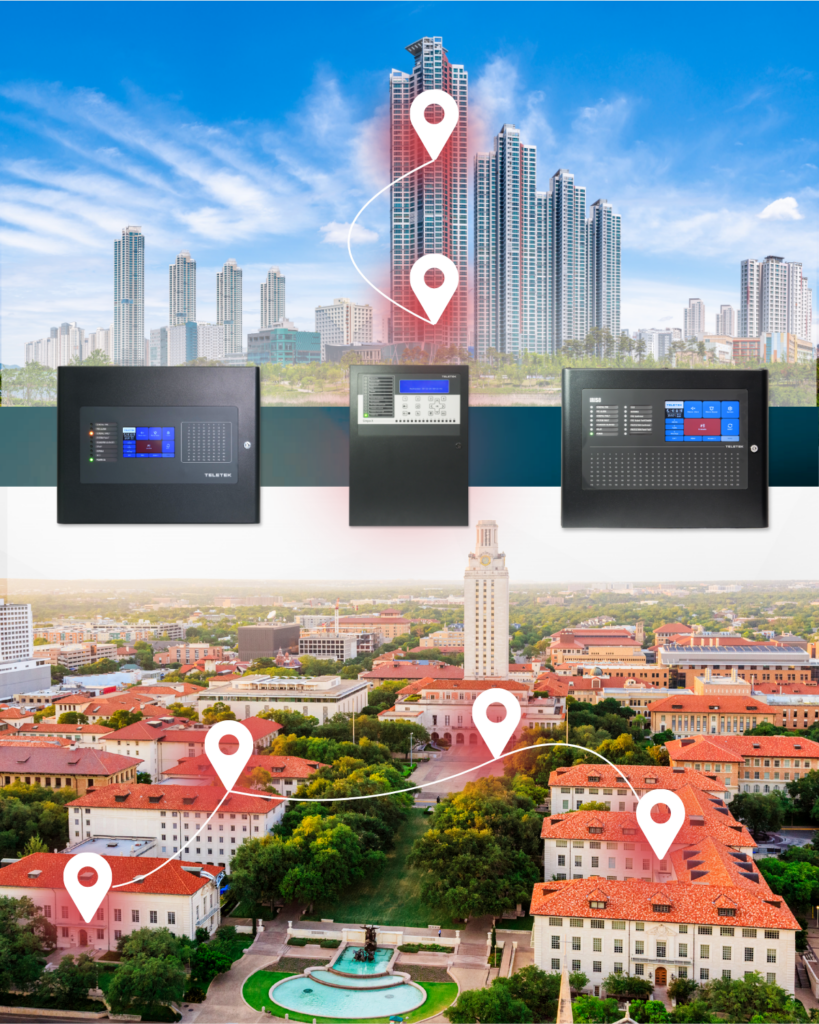
Dies ist besonders nützlich für:
- Mehrstöckige Bürohochhäuser
- Einkaufszentren und Kaufhäuser
- Businessparks und Unternehmenszentren
- Große Baukörper mit unterschiedlichen Nutzungen
- Kaufhauskomplexe mit mehreren miteinander verbundenen Gebäuden
Repeater können auch Systeminformationen an Orten wie Rezeptionen, Sicherheitsräumen oder Einrichtungen bereitstellen, ohne dass Personal zum Hauptsteuerpult gelangen muss.
Wie kann das Brandschutzsystem andere Gebäudetechnische Systeme koordinieren?
In einem großen Gewerbegebäude muss ein Brandmeldesystem möglicherweise mehrere Aktionen automatisch initiieren, abhängig davon, wo das Ereignis auftritt.
Wenn beispielsweise ein Detektor aktiviert wird, Siebter Stock eines Bürogebäudes, Mit der programmierten Ursache-Wirkung-Reihenfolge könnten die Aufzüge auf einen bestimmten Stockwerk zurückgefahren werden. Ebenso könnten die geöffneten Feuertüren wieder geschlossen werden, ausgewählte Luftbehandlungsanlagen angehalten werden, um die Rauchbewegung einzudämmen, die entsprechende Rauchschutzausrüstung aktiviert werden und die Zugangskontrollierte Notausgänge freigegeben werden. Gleichzeitig kann die Alarmanlage an das Gebäudeleitsystem oder die Überwachungseinrichtung übertragen werden.
In einem Einkaufszentrum, Ein Alarm aus einer Einzelhandelsfiliale könnte unterschiedliche Maßnahmen auslösen, die von einem in einem unterirdischen Parkhaus ausgehenden Alarm stammen. Die ersten Maßnahmen könnten sich auf nahegelegene Brand- und Rettungswege auswirken. Gleichzeitig könnte ein Parkplatzvorfall spezielle Rauchabzugssysteme und damit verbundene Warnsysteme aktivieren.
Adressierbare Eingangs-Ausgangsmodule ermöglichen dies, indem spezifische Detektoren, Zonen oder Kombinationen von Ereignissen mit vordefinierten Aktionen verknüpft werden. Die genaue Reihenfolge muss stets den genehmigten Brandschutzstrategien und den geltenden Vorschriften entsprechen.
Wann wird die Sprachevakuierung wichtig?
Große kommerzielle Gebäude können Hunderte oder Tausende von Personen beherbergen. In solchen Umgebungen signalisiert ein einfacher Alarmton den Anwesenden, dass etwas nicht stimmt, aber nicht unbedingt, warum. Wohin man gehen sollte oder was man als nächstes tun sollte. Das kann zu Panik und Verwirrung führen.
Überlegen Sie sich eine Mehrgeschossiges Bürogebäude Wenn im achten Stock ein Brand entdeckt wird. Anstatt die gesamte Anlage gleichzeitig zu evakuieren, könnte die zugelassene Strategie die Bewohner des betroffenen Stockwerks und der benachbarten Stockwerke auffordern, zuerst zu evakuieren. Gleichzeitig erhalten die Bewohner der anderen Stockwerke eine Notfallmeldung. Anschließend können weitere Zonen in einer kontrollierten Reihenfolge evakuiert werden.
In einem Einkaufszentrum, Bei einem Brand in der Nähe des Foodcourts könnte in dem betroffenen Gebiet und den angrenzenden Zonen eine Evakuierungsanweisung ausgelöst werden, während andere Teile des Zentrums zunächst andere Anweisungen erhalten. Sicherheitskräfte können auch durch Live-Anzeigen die Besucher steuern, falls sich die Situation ändert.
Diese Fähigkeit zum Senden Verschiedene Signale für verschiedene Zonen Dies macht die Sprachevakuierung besonders wertvoll in Einkaufszentren, Bürogebäuden, Konferenzzentren und Mischgebäuden, wo eine schrittweise oder kontrollierte Evakuierung erforderlich sein kann.
Welche Teletek-Lösungen eignen sich für große Gewerbliche Gebäude?
Für große und komplexe kommerzielle Projekte bietet Teletek iRIS4 und iRIS8 Adressierbare Plattformen bieten modulare Kapazitäten, Vernetzungsmöglichkeiten, detaillierte Diagnosen und Integrationsoptionen.
iRIS4 Unterstützt bis zu vier Loops und 1.000 adressierbare Geräte pro Panel. iRIS8 Es können bis zu acht Loops und 2.000 Geräte verwaltet werden. Bis zu 64 Panels können in einem Netzwerk verbunden werden, sodass die Systemarchitektur sich über große Gebäude und Mehrfamilienhäuser erstrecken kann. Beide Plattformen unterstützen systemkonformen EN 54-13-Konfigurationen.
Die Panels arbeiten mit dem SensoIRIS Adressierbare Reichweite von Detektoren, Manuelle Anrufstellen, Alarmsystemen und Eingabe-/Ausgabemonitoren. SPIKA Sprachevakuationssysteme können an Teletek-Adressierungsleisten angeschlossen werden und sind gemäß den Normen EN 54-4 und EN 54-16 zertifiziert.
Bei Renovierungsprojekten oder in Bereichen, in denen zusätzliche Verkabelung schwierig ist, Natron-Funkgeräte Kann auch in kompatible adressierbare Systeme integriert werden. Teletek Cloud bietet Fernzugriff auf die Systeme iRIS4, iRIS8 und Simpo X an, einschließlich des Status des Systems in Echtzeit, der Ereignisverlaufe und der Geräteeinheiteninformationen, und unterstützt Wartungsteams, die für große Installationen oder mehrere Standorte verantwortlich sind.

Diese Funktionen werden bereits in großen kommerziellen Projekten eingesetzt. Advance Business Center in Sofia, Zum Beispiel verwendet , vier iRIS4-Panels und mehr als 1.500 SensoIRIS-Rauchmelder. DAS Zentrum Sofia Verwendet zwei iRIS8-Panels über 16 Loops und etwa 950 Detektoren.
Planen Sie ein großes kommerzielles Projekt? Kontaktieren Sie unser Team, um die Systemkapazitäten, die Evakuierungsanforderungen, die Integrationsanforderungen und die zukünftige Erweiterung Ihres Gebäudes zu besprechen.