Fire Alarm Backup Power: Requirements & Battery Sizing
Fire alarm systems are designed to continue protecting buildings even when the main electrical supply fails. Backup batteries keep essential detection and alarm functions operational, but their effectiveness depends on proper system design, battery capacity, and maintenance.
So, how long can a fire alarm system operate without electricity, and what should installers consider when planning its backup power supply?
How Do Fire Alarm Systems Operate Without Mains Power?
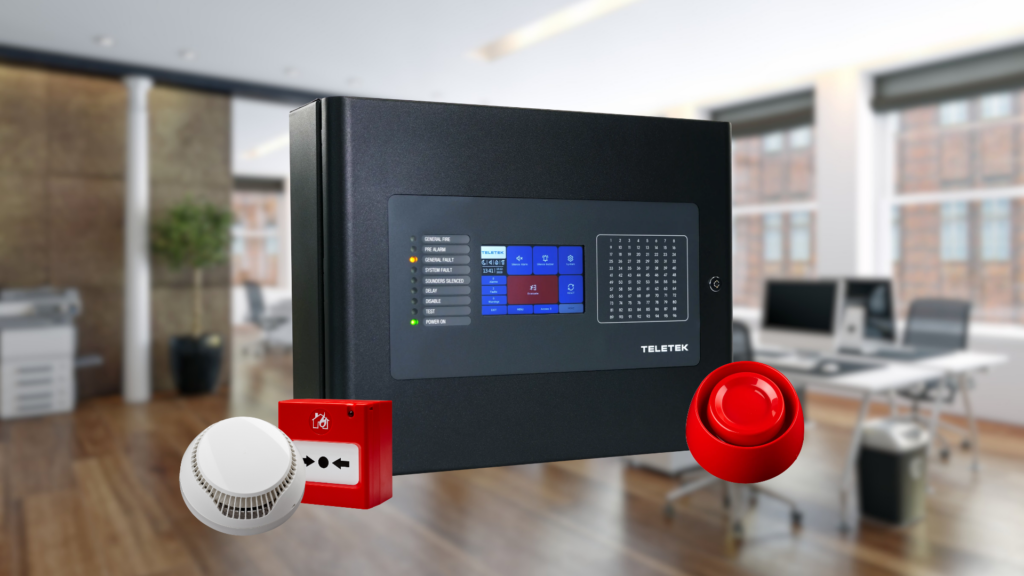
When the main electrical supply fails, the fire alarm control panel automatically switches to its backup batteries. Detectors, manual call points, and alarm notification devices can continue operating, while the panel registers a power supply fault.
This functionality is governed by EN 54-4, the European standard for fire alarm power supply equipment, which defines requirements for power source switching, battery charging, and fault monitoring.
However, the standard does not establish one universal backup duration for every installation. The required operating time depends on the applicable design standards and national regulations.
How Long Must Backup Batteries Keep a Fire Alarm System Operational?
Requirements vary across Europe, depending on the building, system supervision, and availability of maintenance personnel.
STANDARD
BACKUP DURATION, Conditions
CEN/TS 54-14:2018 (European guidance)
24 or 72 hours + 30 min alarm. 24 hours with continuous fault monitoring; 72 hours without. Risk-based assessment is also permitted.
DIN VDE 0833-2 (Germany)
72 hours, reducible to 30 or 4 hours. Shorter durations are permitted under specific monitoring, maintenance, and emergency power conditions.
BS 5839-1:2025 (United Kingdom)
Generally 24 hours + 30 min alarm. Applies to many non-domestic systems, with longer durations required in certain applications.
How Much Battery Capacity Does a Fire Alarm System Actually Need?
The required capacity depends on the combined electrical consumption of the control panel, detectors, sounders, modules, and other connected equipment.
Consider an illustrative two-loop addressable installation consisting of:
Based on the panel’s documented backup-mode consumption and the devices’ electrical specifications, reasonable rounded planning estimates at the battery side are 0.38 A in standby and 1.18 A in full alarm.
Required standby time
Estimated battery capacity*
24 hours + 30 min alarm
13 Ah
48 hours + 30 min alarm
27 Ah
72 hours + 30 min alarm
40 Ah
Illustrative calculation using a 25% ageing allowance and a 1.75 derating factor for alarm current, following a BS 5839-style sizing approach. Values are rounded and are not a verified system configuration or universal regulatory minimum.
The example demonstrates how significantly backup requirements increase with longer standby periods. Even a relatively modest installation may need additional battery capacity to support 72 hours of operation.
Actual sizing must account for the selected equipment, operating settings, battery characteristics, and applicable national requirements.
How Can Systems Be Configured for Extended Backup Power?
For installations requiring longer autonomy, increasing battery capacity may require additional power supply equipment.
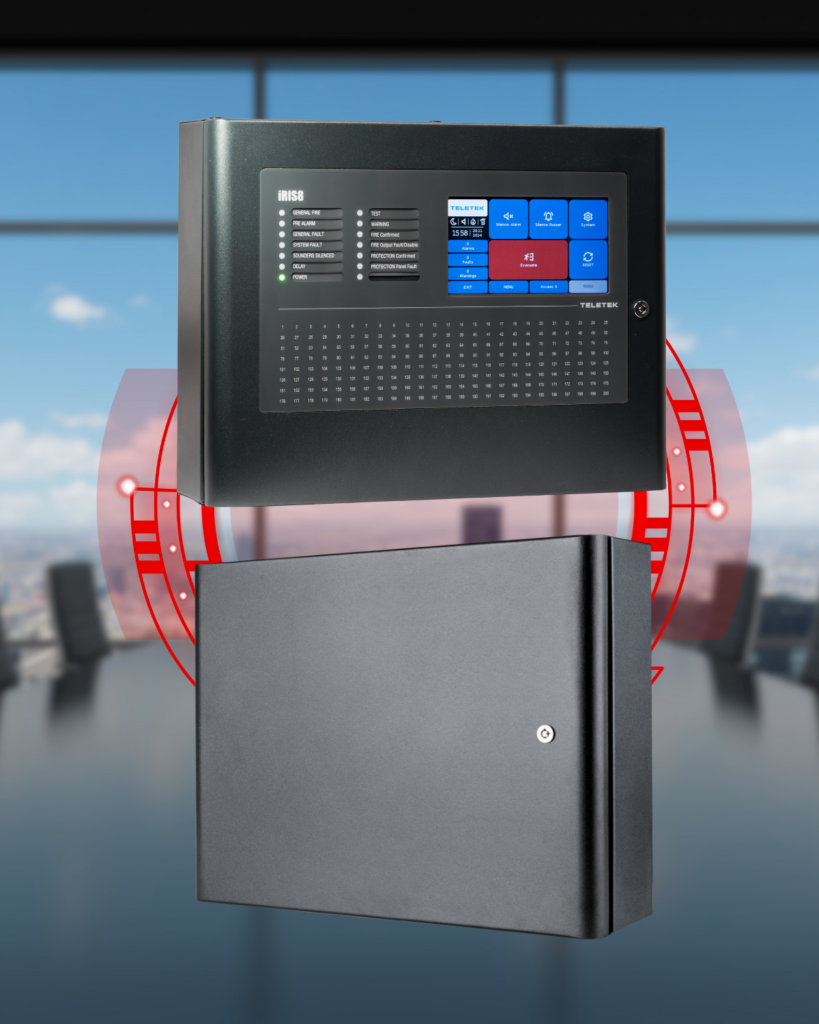
One example is theiRIS PS72 backup power supply unit, designed for use with compatible iRIS addressable fire alarm panels. It supports two additional 12 V / 18 Ah batteries in a modular metal enclosure and is certified to EN 54-4.
The unit provides greater flexibility when designing installations with extended standby requirements, including configurations intended for 72-hour operation. The achievable duration must always be verified against the complete system load.
To simplify planning, our Loop & Battery Calculator helps installers calculate device consumption, required battery capacity, cable lengths, and cable cross-sections for compatible fire alarm systems.
We use cookies to ensure that we give you the best experience on our website. If you continue to use this site we will assume that you are happy with it. Privacy policy