Even high-quality fire alarm equipment can fail to provide the intended protection if it is installed, commissioned, or maintained incorrectly. Common mistakes include incorrect VAD mounting, leaving detectors covered or painted, poorly protected manual call points, confusing evacuation signs, unmanaged renovation work, and irregular maintenance.
A reliable fire alarm system depends on more than selecting certified equipment. Small installation details can reduce device coverage, delay detection, cause unnecessary alarms, or create confusion during an evacuation.
Some mistakes are obvious. Others can remain unnoticed until the system is actually needed.
Here are seven worth checking before your next installation is signed off.
1. Can a Wall-Mounted Siren Be Installed on the Ceiling?
Not if the device is designed and specified for wall mounting.
Visual alarm devices are tested for a defined coverage volume and mounting configuration. EN 54-23 distinguishes between wall, ceiling, and open-category VADs because their light distribution and effective coverage differ.
Installing a wall-mounted VAD on the ceiling may therefore change where the required light and sound level is achieved. This can potentially leave part of the intended area outside its certified coverage.
For example, a wall VAD positioned at the correct height may be designed to cover a defined rectangular area in front of it. Turn that same device towards the floor and the coverage pattern no longer represents the application for which it was specified.
What to check: device category, approved mounting orientation, mounting height, and declared coverage before installation.
2. How Can You Avoid Accidental Manual Call Point Activation?
Manual call points must remain immediately accessible, but in some locations they can also be vulnerable to accidental activation.
Consider a call point installed in a narrow corridor, beside seating, or in another high-traffic area. Someone leaning against the wall, moving equipment, or even bending down close to the device could accidentally operate it.
Where the design and local requirements allow it, a suitable transparent protective cover can reduce accidental operation without preventing the call point from being used in an emergency.
The important distinction is that the optional solution should protect against accidental activation without making intentional activation difficult. Manual call points themselves fall under EN 54-11 requirements.
3. What Happens If the Protective Cap Is Left on a Smoke Detector?
This is probably the easiest mistake on the list to overlook.
Protective covers are useful while a building is still dusty or construction work is taking place. Once the fire alarm system enters normal operation, however, that cover must be removed.
A cap left over a smoke detector restricts the path through which smoke reaches the sensing chamber. The detector may therefore respond later than intended or fail to detect the developing fire correctly.
It is a small piece of plastic, but it can undermine the purpose of the device underneath it.
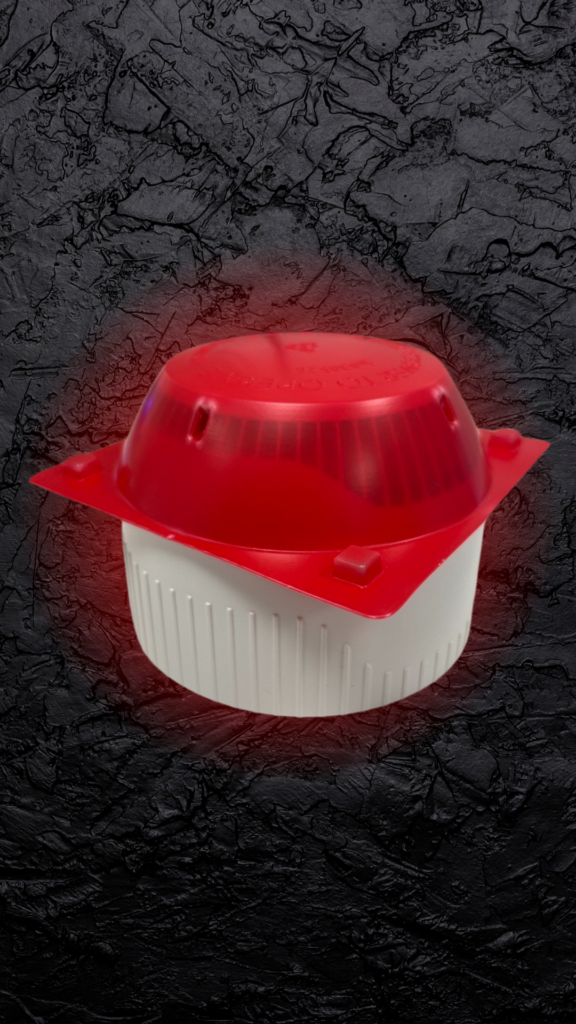
Before commissioning, visually inspect every detector rather than assuming all protective covers have been removed.
4. What happens if paint gets on the smoke detector?
Paint can block smoke-entry openings or contaminate the sensing area. Even partial overspray around a detector can alter the way air and smoke enter the device.
A common scenario is a renovation where the ceiling is sprayed or rolled without removing or properly protecting the detector first. Afterwards the device may look cleaner because it matches the ceiling perfectly, but its performance may no longer correspond to the tested product.
If a detector has been painted or contaminated, it should be assessed according to the manufacturer’s instructions rather than simply cleaned cosmetically and returned to service.
5. How and Where Should Fire Exit Signs Be Placed?
A directional sign may be installed too high, hidden by another object, positioned where it becomes difficult to see, or show information that is ambiguous from different approaches.
Two-sided signs deserve particular attention. Imagine a sign at a corridor junction where both faces remain visible from an unintended angle. Depending on where someone is standing, especially in poor visibility or smoke, the apparent direction could become confusing rather than helpful.
The final inspection should therefore involve walking the actual escape route from the positions occupants will approach it, rather than checking the sign only from directly underneath.
6. Can Renovation Work Trigger a False Fire Alarm?
Renovation work can interfere with an active fire alarm system much more easily than people expect. Drilling, sanding, cutting, painting, welding, and other temporary activities can produce dust, smoke, aerosols, or changes in airflow that reach nearby detectors and trigger an unwanted alarm.
We had a very real example of this just a few weeks ago at our own factory. Renovation work was taking place in our storage area, and the activity affected an active beam detector. The fire alarm system responded exactly as it was designed to, which meant the entire building had to be evacuated even though there was no fire.
The issue was not with the detector or the system. The problem was that the renovation work and the fire alarm system had not been coordinated closely enough beforehand. It was a good reminder that temporary work can create real consequences when detectors remain active in affected areas.
Before renovation starts, the responsible team should identify which devices could be exposed to dust, smoke, or aerosols and decide whether temporary isolation is necessary. If devices are isolated, only the relevant area should be affected, suitable temporary precautions should remain in place, and everything must be restored and tested as soon as the work is finished.
How Can Teletek Support Correct Installation and Commissioning?
Good installation starts long before the final system test. Teletek provides several tools that can help installers plan, configure, and verify a project more accurately.
The Loop Calculator for iRIS and SIMPO can be used during design to check cable length and thickness against the number of devices planned on the loop. ProsTE supports programming of Teletek fire alarm panels, while the SensoIRIS Programmer and SensoIRIS Loop Tester give installers dedicated tools for addressing, configuration, and loop-level checks during installation and commissioning.
The Teletek Portal also provides installation manuals, quick guides, firmware, certificates, and other technical documentation for individual products. That matters for details such as correct mounting orientation, terminal connections, device settings, and commissioning procedures, precisely the kind of small details that can turn into larger problems when they are overlooked.
After handover, TeletekPro and Teletek Cloud can support maintenance teams with live system status, event history, device information, notifications, and maintenance planning. This does not replace physical inspection and testing, but it can make recurring faults or devices requiring attention easier to identify.
Ultimately, avoiding installation mistakes is a combination of good design, following the product documentation, using the right commissioning tools, and testing the complete system before handover.
Need documentation, software, or technical support for an installation? Visit the Teletek Portal or contact our team.