An effective intruder alarm system protects the most likely entry points first, then monitors the routes an intruder would take through the property. It should also provide clear alarm notification, reliable communication, and arming options that match how the home or business is actually used.
More detectors do not automatically provide better protection. Installing a PIR detector in every corner may add cost and complexity without addressing the most likely intrusion scenarios. The number and type of devices should instead reflect the property layout, accessible entry points, movement routes, daily routines, and required level of protection.
The objective is to build several coordinated layers of protection, not simply to fill rooms with equipment.
What Are the Main Layers of an Intruder Alarm System?
Protection layer
Purpose
Typical devices
Example
Perimeter protection
Detect an intrusion at the point of entry
Magnetic contacts and roller-shutter detectors
Front door, balcony door, accessible window, shop shutter
Interior detection
Identify movement after entry
PIR or dual-technology motion detectors
Hallway, staircase, living area, sales floor
Critical-area protection
Add coverage around valuable or sensitive areas
Motion detectors, contacts, or PIRCAM detectors
Stockroom, server room, safe, home office
Alarm notification
Warn occupants and attract attention
Indoor and outdoor sirens, app notifications
Alarm heard inside while the owner is notified remotely
Verification and communi-cation
Provide context and transmit events
PIRCAMs, IP cameras, LAN, Wi-Fi, and mobile communication
Reviewing images after an alarm or maintaining connectivity if one route fails
Which Entry Points Should Be Protected First?
Start with the places an intruder is most likely to use.
In an apartment, these may include the front door, balcony door, and windows accessible from the ground, a neighbouring roof, or a shared terrace. In a small shop, the priority may be the customer entrance, rear delivery door, emergency exit, stockroom door, and external roller shutter.
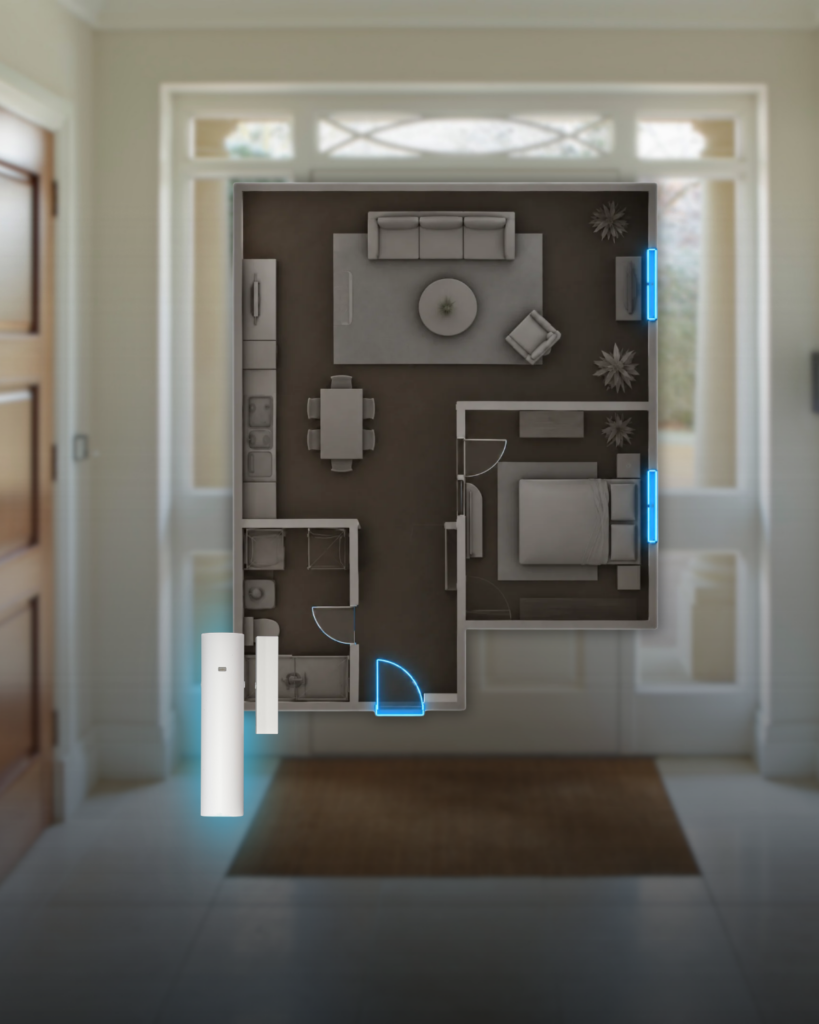
Magnetic contacts can detect when a protected door or window opens, allowing the system to identify an intrusion before the person has moved further into the property.
A roller shutter may require a dedicated contact or pulse detector capable of recognising movement or interference. This is different from protecting a standard hinged door and should be considered during the initial survey.
Not every window automatically needs its own device. Accessibility, visibility, construction, expected intrusion method, and the protection provided by other layers should all influence the decision.
Where Should Motion Detectors Be Placed?
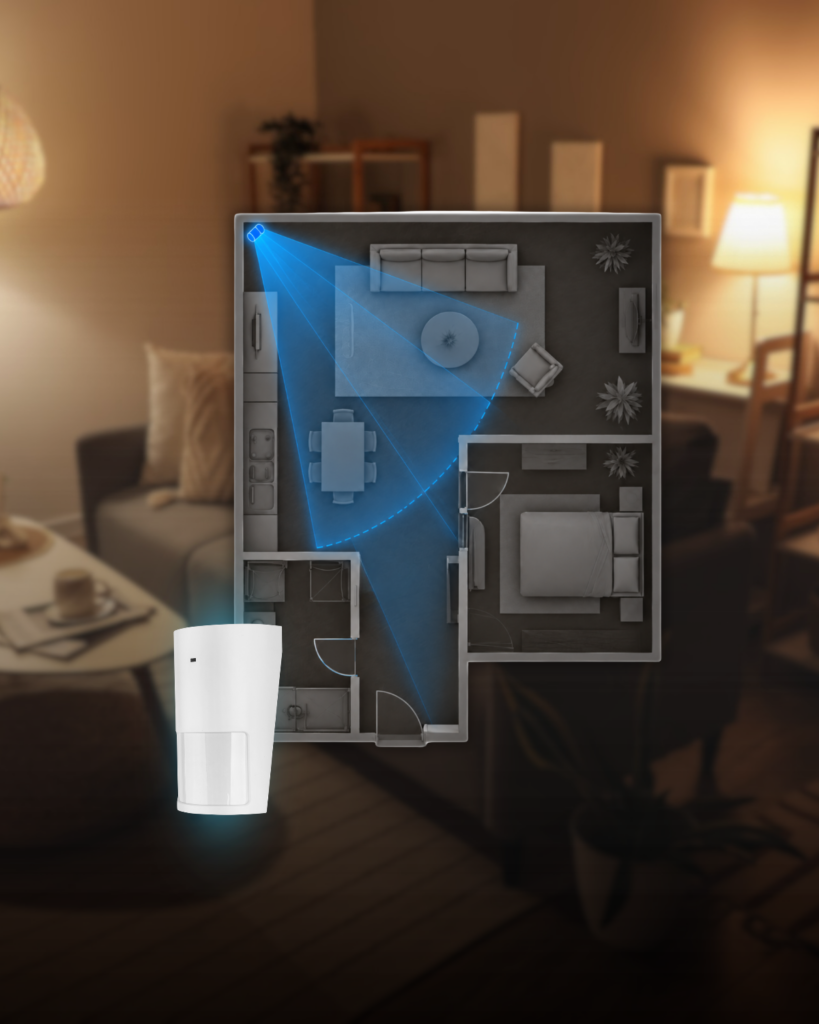
Once the entry points are covered, consider the routes a person would most likely take through the property.
A well-positioned motion detector may cover a hallway, the route from the entrance to the living area, and movement between several rooms.
For example, a two-bedroom apartment might use:
A magnetic contact on the front door
A second contact on an accessible balcony door
One PIR detector covering the entrance hall and route towards the living room
An additional detector or PIRCAM covering a particularly vulnerable area
That may offer more useful protection than placing separate motion detectors in every room.
Many of our partners share that homeowners prefer to have a PIRCAM placed in the entrance hallway, facing the front door. A common setup combines it with a magnetic contact on the door and a keypad nearby. When the door opens, the system starts a short entry delay, giving the authorised user time to disarm the alarm. If the system is not disarmed within that period, the PIR/PIRCAM acts as a follow-up zone and the alarm is triggered.
This arrangement gives the user a practical way to enter normally while still monitoring one of the most likely movement routes through the property.
How Many Intruder Detectors Do You Need?
There is no fixed number. The answer depends on the layout, entry points, movement routes, and level of protection required.
A compact apartment with one entrance and a simple floor plan may need only a few carefully placed devices. A larger house with several floors, a garage, multiple accessible windows, and separate circulation routes will usually need more.
The same principle applies to businesses. A single-room shop should not receive the same configuration as a property with a sales floor, stockroom, office, rear entrance, and roller shutter.
The better question is:
Can the system detect the most likely intrusion routes without leaving important gaps or creating unnecessary overlap?
How Should an Alarm Be Communicated and Verified?
Local sirens remain important because they warn occupants and draw attention to an intrusion, while remote notifications keep the owner informed when nobody is at the property.
Visual verification can add useful context to that alert. For example, a PIRCAM can capture images when movement is detected, while connected IP cameras can provide a live view of selected areas. In a system such as EMA, these functions can be accessed alongside alarm information and system control through the same app, making it easier to understand what triggered an event and decide how to respond.
A shop owner receiving an alarm after closing could therefore check whether the event appears to involve an intruder, an employee entering unexpectedly, or another activity that requires investigation. Visual verification does not replace intrusion detection, but it can make the information provided by the system far more useful.
Frequently Asked Questions
Not necessarily. A well-positioned PIR can often monitor a key hallway, living area, or route between several rooms. Protecting the most likely entry points and movement paths is usually more effective than simply placing a detector in every room.
It can be, especially when the user needs more context after an alarm. A PIRCAM can provide images linked to a detected event, while compatible IP cameras can provide a live view of selected areas. This helps users assess what may have caused the alarm without replacing the intrusion detection itself.
A properly designed wireless system can provide reliable protection, provided radio coverage, interference, battery condition, device supervision, and installation requirements are considered. Wireless systems are particularly useful in finished homes, apartments, shops, and offices where running new cables would be disruptive.
Planning an intruder alarm project?
Contact our team to find a configuration that fits the property and can grow with its protection needs.