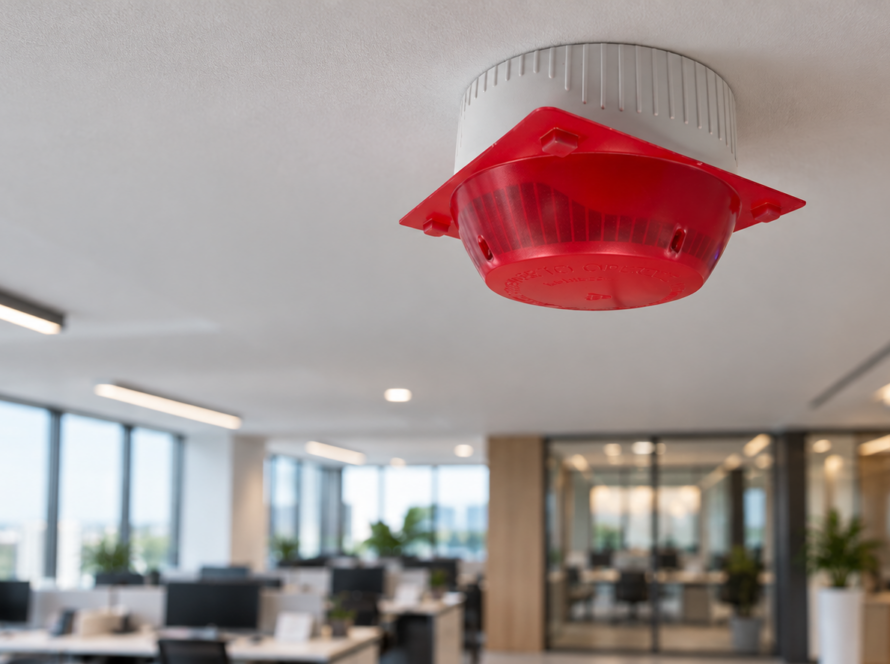
Fire safety in industrial facilities has to be designed around the processes taking place inside the building, not simply its size. High ceilings, heavy airflow, dust, steam, machinery, combustible materials, noisy production areas, and changing layouts can all influence how quickly a fire is detected and how effectively people are warned.
The challenge is therefore not simply to install more detectors across a larger area. It is to make sure the system can identify an event early, communicate it clearly, and initiate the right response without normal industrial activity constantly interfering with detection.
What Fire Safety Challenges Are Common in Industrial Buildings?
As a building grows, so does the amount of information the fire alarm system must manage.
AREA
TYPICAL CHALLENGEs
FIRE SAFETY CONSIDERATIONS
Production hall
Heat, dust, fumes, machinery, noise
Audible and visual alarm coverage, suitable detection technology
High-bay warehouse
Large volume and high ceilings
Beam or other suitable detection for wide, open spaces
Loading and dispatch area
Open doors, moisture, dust, exhaust, temperature changes
Suitable weather-resistant alarm devices
How Should Fire Detection Be Designed for High-Ceiling Warehouses and Production Halls?
High ceilings do not only make detectors harder to install and maintain. They can fundamentally affect how quickly smoke reaches detection equipment.
In some conditions, smoke stratification can also occur. Instead of continuing all the way to the ceiling, the smoke plume may lose buoyancy and form a layer lower in the space. This can delay the response of point detectors mounted at ceiling level.
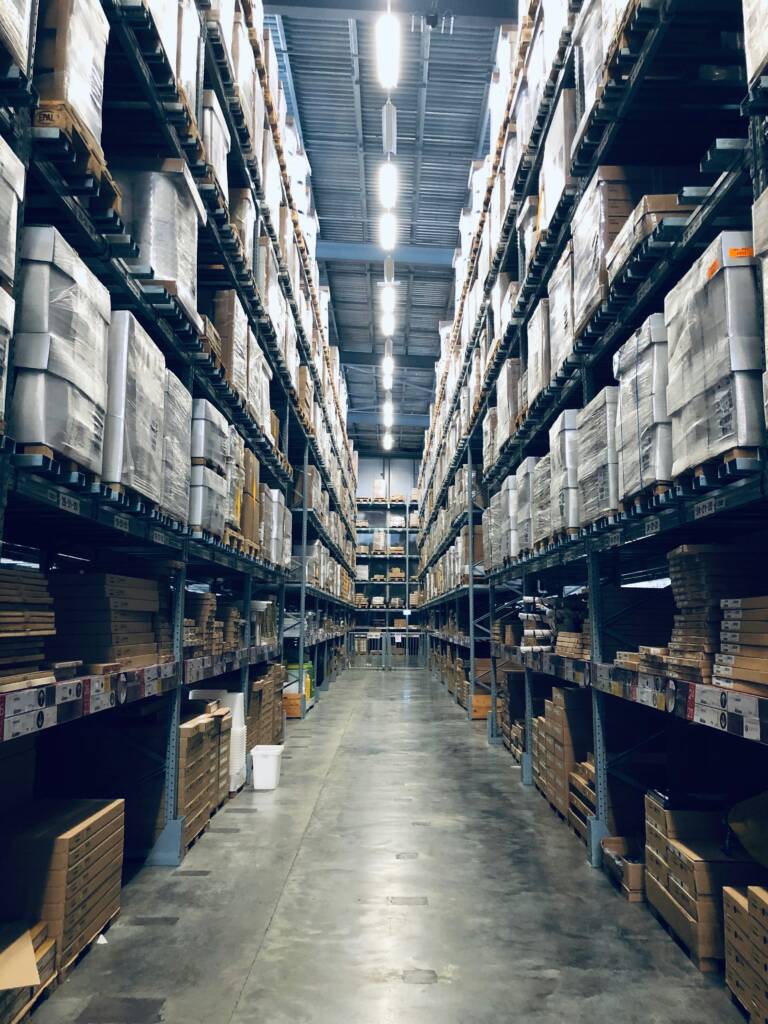
Consider a 15-metre-high warehouse with long storage aisles and strong mechanical ventilation. Simply spacing point smoke detectors across the ceiling as if it were a conventional office would not adequately account for how smoke may behave in that space.
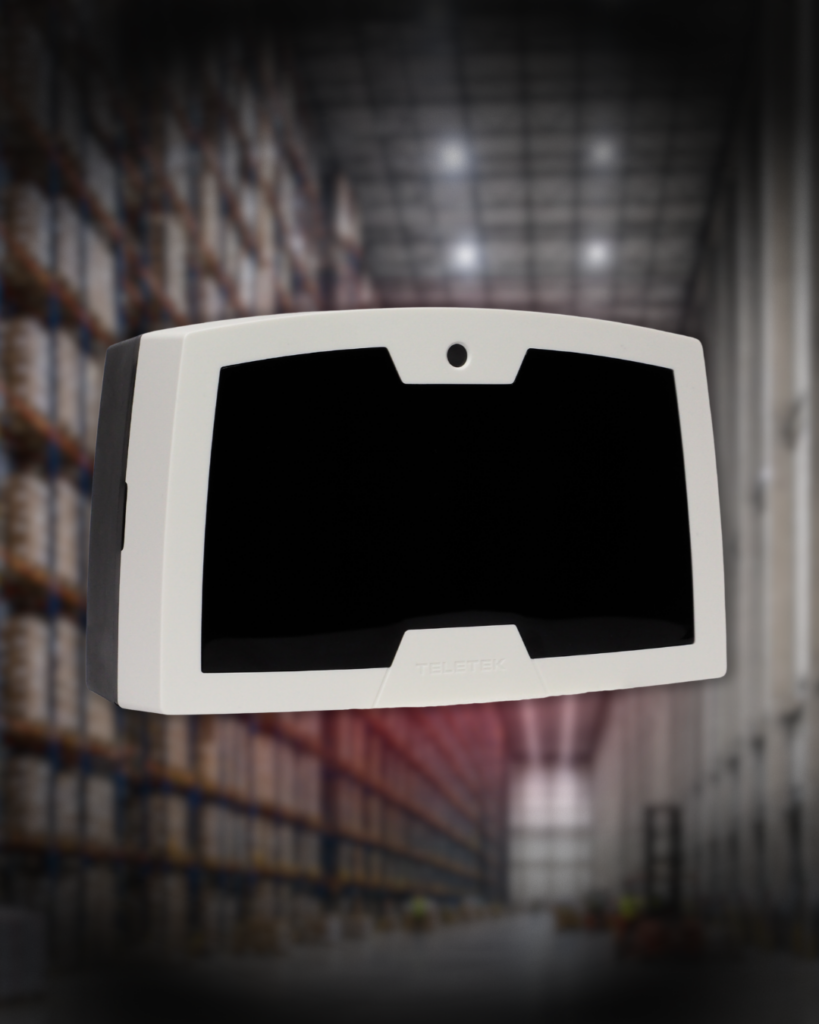
For large, unobstructed spaces, optical beam smoke detection can be one suitable approach. A beam detector monitors smoke obscuration across a long optical path, allowing a wide section of the building to be supervised without installing numerous point detectors at ceiling level.
For example, the SensoIRIS BM60 and BM120 can be used in addressable installations with detection paths of 5 to 60 metres and 50 to 120 metres respectively, with coverage up to 15 metres wide. Laser-assisted alignment and automatic calibration also help during installation in large spaces where access may be more difficult. Conventional SensoMAG versions are available for projects using that architecture.
That does not mean a beam detector is automatically the right answer for every high-ceiling facility. Its optical path must remain clear. High storage racks, structural beams, cranes, suspended equipment, or future changes to the warehouse layout can block the beam or interfere with its operation.
Other technologies may therefore be more appropriate in certain applications, including aspirating smoke detection, point detectors positioned at suitable levels, or a combination of several methods.
How Can False Alarms Be Reduced in Production Areas?
Industrial processes can generate many of the same physical conditions that fire detectors are designed to recognise.
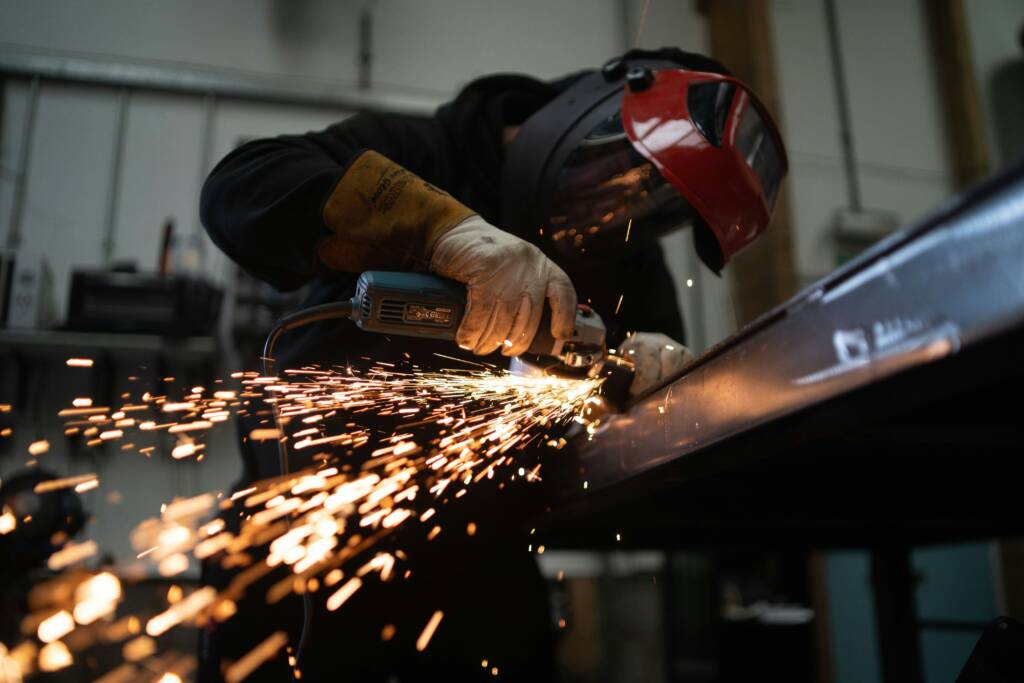
Welding produces smoke. Cutting and grinding create fine particles. Food production can produce steam. Loading bays may be exposed to vehicle exhaust. Maintenance work can suddenly introduce dust into an area that is normally clean. Renovations or adding more storage racks can obstruct beam detectors.
We saw the consequences ourselves a few weeks ago at our own factory. Expansion work was taking place in the warehouse while the fire alarm system remained active. The work affected one of the beam detectors and the system responded exactly as designed, which resulted in the whole building being evacuated even though there was no fire.
The incident was a useful reminder that temporary activities need to be considered just as carefully as permanent production processes.
Before dusty, smoky, or disruptive work begins, the responsible teams should establish:
- Which detectors may be affected
- Whether temporary isolation is necessary
- Which parts of the system must remain active
- What alternative precautions are required during the work
- Who is responsible for restoring the system afterwards
Any isolated devices must be returned to service and tested when the work is complete.
The same principle applies to recurring false alarms during normal production. If one area repeatedly activates because of steam, dust, exhaust, or another expected condition, simply resetting the panel does not solve the problem. The detector technology, process, ventilation, device condition, and surrounding environment should be reviewed together.
How Should Fire Alarms Work in Noisy Industrial Areas?
In a quiet office, an audible alarm may be immediately obvious. In a production hall with presses, conveyors, ventilation systems, or workers using hearing protection, the situation is very different.
Alarm notification needs to be evaluated under normal operating conditions, not only during commissioning when machinery happens to be switched off.
For example, a metalworking plant may have a machining hall where background noise is continuously high. The design may need to combine audible alarm devices with visual alarm devices so workers receive more than one form of warning.
A larger facility may also benefit from voice evacuation where the evacuation strategy requires clear instructions or different messages for different areas.
For instance, workers in one production zone could receive an evacuation message while employees elsewhere are instructed to remain alert or follow another predefined procedure. Whether this is appropriate depends on the approved evacuation strategy and applicable requirements.
Industrial Fire Safety Checklist
- Assess the normal conditions around each production process, including heat, dust, steam, fumes, and exhaust.
- Consider ceiling height, airflow, smoke movement, storage height, and possible obstructions when selecting detection.
- Define which machinery, ventilation, doors, smoke-control, or other systems should respond to different alarm scenarios.
- Make sure alarm notification remains effective under normal operating conditions, including machinery noise and hearing protection.
- Coordinate renovation, maintenance, welding, and other temporary work with the fire alarm system to avoid unnecessary activations.
- Review the fire alarm design whenever production processes, storage arrangements, ventilation, or building layouts change.