Fire safety in hotels requires early detection, effective warning for sleeping occupants, exact identification of the alarm location, and coordinated evacuation. Hotels often benefit from addressable fire alarm systems, room-based sounders, visual alarm devices, and voice evacuation solutions selected according to the size and fire strategy of the building.
Hotels remain occupied around the clock and contain guests who are often unfamiliar with the building. During the night, many occupants are asleep behind closed doors and may need more time to recognise an alarm, understand what is happening, and find the nearest safe exit.
At the same time, a hotel combines guest rooms, kitchens, restaurants, conference halls, technical spaces, storage areas, wellness facilities, and staff-only zones. Each presents different environmental conditions and fire risks, so an effective system cannot rely on the same detector and notification approach throughout the property.
How Should Sleeping Hotel Guests Be Alerted?
One of the key differences between hotels and many other building types is that guests spend a significant portion of their stay asleep.
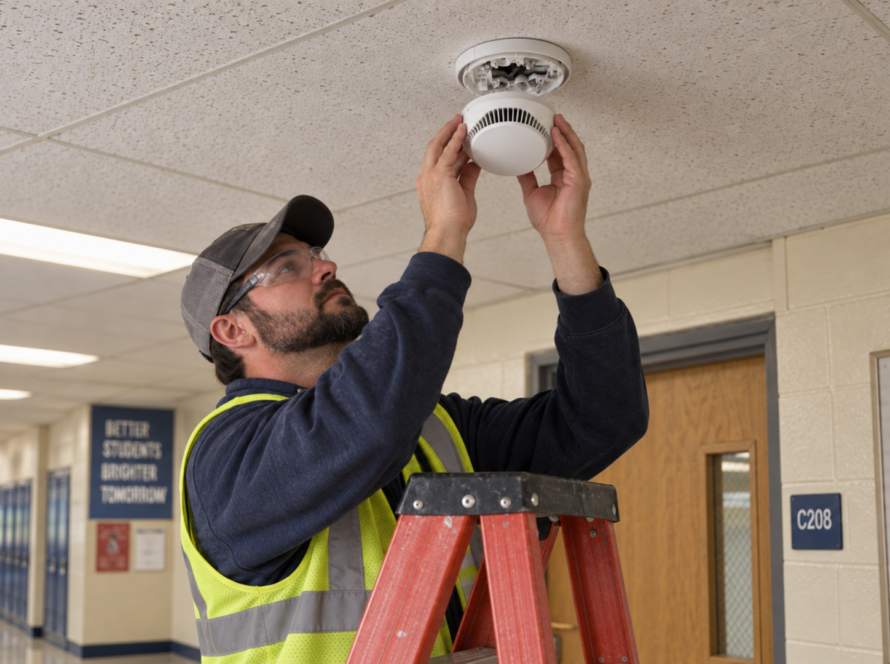
Sleeping occupants may not hear an alarm device installed only in a corridor. Room-based sounders or detector sounder bases bring the warning directly into the guest accommodation area, helping ensure that the alarm reaches occupants behind closed doors.
The selected devices, sound levels, and positions must follow the approved design and applicable requirements. The objective is to provide a clear and recognisable warning that wakes sleeping guests and supports an orderly response.
Visual alarm devices may also be required to improve accessibility and provide an additional form of notification. In corridors, overdoor indicators can help hotel staff and emergency responders identify the room connected to an activated detector without checking several similar doors.

Which Fire Safety Solutions Are Suitable for Different Hotel Areas?
Guest rooms are only one part of a hotel’s fire safety strategy. Restaurants, kitchens, conference areas, technical rooms, storage spaces, wellness facilities, and back-of-house operations all present different risks and require tailored protection measures.

Guest rooms and corridors typically rely on smoke detection for early warning, while kitchens may require heat detectors to avoid unwanted alarms caused by cooking fumes, steam, or high temperatures. Technical rooms, electrical installations, and server rooms may benefit from specialised detection solutions capable of identifying fire risks at their earliest stages, helping prevent damage to critical infrastructure.
Large public spaces such as lobbies, restaurants, and conference halls require reliable coverage across open areas with varying occupancy levels throughout the day. Storage areas and service corridors, meanwhile, must remain continuously monitored despite receiving little day-to-day attention from guests and staff.
An effective fire detection system integrates all of these areas into a single monitoring platform, providing hotel personnel with clear information about the location and nature of an incident. Together, these technologies support faster response times and safer evacuations when every second matters.


Which Teletek Solutions Are Suitable for Hotels?
Guests rarely think about fire safety when they check into a hotel, and that’s exactly how it should be. Behind the scenes, however, reliable fire detection systems work 24/7 to provide protection.
From boutique hotels to large hospitality complexes, Teletek offers scalable fire detection, alarm notification, system control, wireless, and voice evacuation solutions.
For small and medium-sized addressable projects, Simpo X supports up to 500 devices across 48 zones and can operate as a standalone panel or within a network. Larger properties can use the scalable iRIS4 and iRIS8 platforms, with support for up to 1,000 and 2,000 devices per panel respectively and EN 54-13-certified system configurations.
The SensoIRIS range includes EN 54-certified smoke, heat, and combined detectors, manual call points, sounders, visual alarm devices, detector sounder bases, beam detectors, and input-output modules. This allows guest rooms, kitchens, corridors, technical spaces, and large public areas to be protected according to their specific needs.
For renovations or areas where new cabling would be disruptive, the Natron wireless range can support flexible hybrid / wireless installations. Hotels requiring spoken emergency instructions can also integrate SPIKA voice evacuation solutions, certified according to EN 54-4 and EN 54-16.
Together, these solutions allow designers and installers to build a coordinated system around the size, layout, and operational needs of each property.
Planning a hotel project? Contact our team to find the right combination of fire detection, alarm notification, wireless, and voice evacuation solutions for your property.
FREQUENTLY ASKED QUESTIONS
Hotel alarm notification must be designed to provide an effective warning to sleeping occupants. Whether room sounders, detector sounder bases, visual alarm devices, or other solutions are required depends on the approved design and applicable regulations.
Voice evacuation may be appropriate in larger or more complex hotels where guests need clear spoken instructions. Its use depends on the property’s layout, occupancy, local requirements, and approved evacuation strategy.
Yes. Smoke detection is commonly suitable for clean accommodation areas, while heat detection may be more appropriate in kitchens where steam and cooking aerosols are normally present.